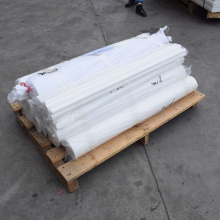
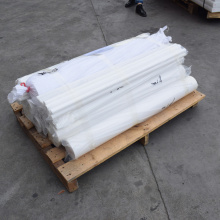
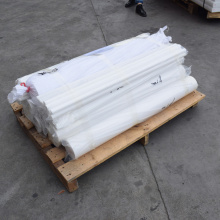
PTFE ROD, also known as Polytetrafluoroethylene rod, is a high-performance engineering plastic manufactured through processes like ram extrusion or isostatic molding. At Kaxite Sealing, we specialize in producing premium-grade PTFE rods that deliver exceptional performance in the most demanding sealing, insulating, and low-friction applications. Recognized for its unparalleled chemical resistance, wide service temperature range, and excellent dielectric properties, PTFE rod is a versatile material choice across industries from aerospace and chemical processing to food & beverage and semiconductor manufacturing.
Our commitment at Kaxite Sealing is to provide not just a product, but a reliable material solution. We ensure precise dimensional accuracy, consistent density, and superior surface finish in every rod we produce, supporting your precision machining and fabrication needs.
### Key Characteristics & Material Advantages
The widespread adoption of PTFE rod stems from its unique combination of properties, which are inherent to the PTFE polymer itself. These include:
* **Exceptional Chemical Resistance:** Inert to nearly all industrial chemicals and solvents, making it ideal for seals and components in aggressive environments.
* **Broad Temperature Range:** Performs reliably from cryogenic temperatures as low as -200°C (-328°F) up to +260°C (+500°F) continuously.
* **Outstanding Electrical Properties:** One of the best dielectric materials available, with a very high dielectric strength and low dissipation factor.
* **Low Coefficient of Friction:** Possesses the lowest coefficient of friction of any solid material, providing excellent anti-stick and self-lubricating characteristics.
* **Excellent Weatherability and UV Resistance:** Unaffected by outdoor exposure, ozone, and sunlight.
* **High Purity and FDA Compliance:** Virgin PTFE grades are physiologically inert and comply with FDA regulations for food contact applications.
* **Non-Flammability:** PTFE is inherently flame-retardant.
### Kaxite Sealing PTFE Rod: Detailed Product Specifications
Our standard PTFE rod products are available in various grades, diameters, and lengths to suit diverse applications. Below are the detailed specifications for our virgin PTFE rods.
#### **Standard Material Grades & Properties**
| Property | Test Standard | Unit | Virgin PTFE (Standard) | Virgin PTFE (High-Purity) | Glass-Filled PTFE | Carbon-Filled PTFE |
| :--- | :--- | :--- | :--- | :--- | :--- | :--- |
| **Density** | ASTM D792 | g/cm³ | 2.14 - 2.20 | 2.14 - 2.18 | 2.20 - 2.30 | 2.10 - 2.20 |
| **Tensile Strength** | ASTM D638 | MPa (psi) | 25 - 35 (3600 - 5000) | 20 - 30 (2900 - 4300) | 15 - 25 (2200 - 3600) | 17 - 20 (2500 - 2900) |
| **Elongation at Break** | ASTM D638 | % | 300 - 500 | 350 - 550 | 250 - 350 | 200 - 300 |
| **Melting Point** | - | °C (°F) | 327 (621) | 327 (621) | 327 (621) | 327 (621) |
| **Continuous Service Temp.** | - | °C (°F) | -200 to +260 (-328 to +500) | -200 to +260 (-328 to +500) | -200 to +260 (-328 to +500) | -200 to +260 (-328 to +500) |
| **Coefficient of Friction** | ASTM D1894 | - | 0.05 - 0.08 | 0.05 - 0.08 | 0.10 - 0.20 | 0.10 - 0.15 |
| **Dielectric Strength** | ASTM D149 | kV/mm | 45 - 60 | 45 - 60 | 40 - 55 | 30 - 45 |
#### **Available Sizes & Packaging**
Kaxite Sealing PTFE rods are supplied in standard lengths and can be custom-cut to your requirements.
* **Standard Diameters:** Available from 5mm (0.2") up to 300mm (12") and larger upon request.
* **Standard Lengths:** 500mm (19.7"), 1000mm (39.4"), and 2000mm (78.7").
* **Tolerances:** Standard dimensional tolerance conforms to DIN 7715/ISO 13000. Commercial (machining) grades and precision grades are available.
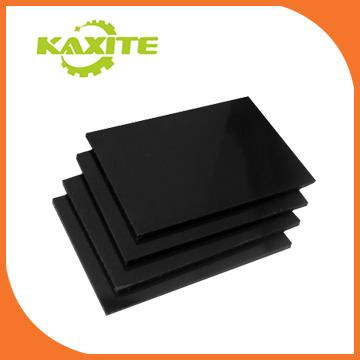
* **Color:** Virgin PTFE is naturally opaque white. Filled compounds are typically black or dark grey.
* **Packaging:** Individually wrapped or boxed to prevent contamination and damage during transit.
### Common Applications of PTFE Rod Stock
PTFE rod is machined into a vast array of components. Its properties make it indispensable for:
1. **Sealing Components:** Glands, piston rings, V-rings, backup rings, valve stem packing, and gaskets for chemical pumps, valves, and compressors.
2. **Electrical & Semiconductor:** Insulating spacers, coil bobbins, terminal blocks, wafer carriers, and components for high-frequency applications.
3. **Industrial Machinery:** Bearings, bushings, slides, wear plates, and low-friction liners in food processing, packaging, and printing equipment.
4. **Chemical Processing:** Lab equipment, stirring paddles, dip tubes, tank fittings, and linings exposed to corrosive fluids.
5. **Aerospace & Automotive:** Seals, rings, and insulators in fuel systems, hydraulics, and engine compartments.
### Frequently Asked Questions (FAQ) About PTFE Rod
**Q: What is the difference between extruded and molded PTFE rod?**
A: Extruded rod is produced by forcing PTFE paste through a die, resulting in a uniform grain structure oriented lengthwise. It is ideal for machining parts where strength along the length is critical. Molded rod, created by compressing powder in a mold under high pressure, has a more isotropic (uniform in all directions) structure. Kaxite Sealing offers both types, guiding customers to the optimal form for their specific machining and performance requirements.
**Q: Can PTFE rod be used for high-pressure applications?**
A: While PTFE has excellent chemical and thermal properties, it is susceptible to cold flow (creep) under sustained high mechanical load. For high-pressure dynamic seals, filled grades (e.g., glass, bronze, carbon) from Kaxite Sealing are recommended as they exhibit reduced creep and improved wear resistance. Proper gland design is also crucial for success in high-pressure scenarios.
**Q: How do I machine components from a PTFE rod?**
A: PTFE is soft and easily machinable with standard metalworking tools, but it requires specific techniques. Use sharp, high-speed steel or carbide tools. Employ high cutting speeds, low feed rates, and ample clearance to prevent material drag. Proper clamping is needed to avoid deformation, and cooling with compressed air is preferred over liquids. Kaxite Sealing can provide detailed machining guidelines.
**Q: Is PTFE rod safe for use in food processing or medical applications?**
A: Yes, virgin (unfilled) PTFE resin is FDA-compliant, USP Class VI rated, and meets EU regulations for food contact. It is physiologically inert, non-toxic, and does not support bacterial growth. Kaxite Sealing's high-purity virgin PTFE rods are specifically produced for these sensitive industries, with stringent quality control to ensure compliance and traceability.
**Q: What are the benefits of filled PTFE compounds (like glass or carbon filled)?**
A: Filled PTFE rods incorporate materials like glass fiber, carbon, graphite, or bronze to enhance specific properties of pure PTFE. Benefits include greatly improved resistance to wear and deformation under load (creep), increased hardness and stiffness, better thermal conductivity, and reduced thermal expansion. Kaxite Sealing offers a range of filled compounds to solve challenges where virgin PTFE may be limited.
**Q: How should PTFE rods be stored?**
A: Store PTFE rods in a clean, dry, and cool environment away from direct sunlight and heat sources. They should be kept flat or properly supported to prevent bending or distortion over time. Avoid contact with sharp objects that could scratch the surface. No special humidity control is needed.
**Q: Can Kaxite Sealing provide custom-sized or custom-formulated PTFE rods?**
A: Absolutely. Beyond our standard inventory, Kaxite Sealing excels at manufacturing custom solutions. We can produce rods in non-standard diameters, lengths, and with specialized compound formulations (e.g., specific filler percentages, colorants for coding, or additives for enhanced performance) to meet unique application challenges. Contact our engineering team with your specifications.
**Q: How does the price of PTFE rod compare to other engineering plastics like Nylon or Acetal?**
A: PTFE rod is typically more expensive per kilogram than common thermoplastics like Nylon or Acetal (POM). This higher cost is justified by its superior performance in extreme conditions—extreme chemical resistance, higher temperature capability, and lower friction—where other materials would fail. The total cost of ownership is often lower due to longer component life and reduced downtime.
Choosing the right PTFE rod supplier is critical for project success. Kaxite Sealing combines decades of material expertise with rigorous manufacturing standards to deliver products that perform consistently. Our technical support team is ready to assist with material selection, design consultation, and troubleshooting to ensure you achieve optimal results with our PTFE rod products.