In demanding industrial environments where structural integrity, electrical insulation, and wear resistance are non-negotiable, the right material choice is critical. Kaxite Sealing presents the 3025 Phenolic Cotton Laminated Rod, a high-grade thermoset composite engineered for exceptional performance. This material represents a pinnacle of lamination technology, where layers of cotton cellulose fabric are impregnated with a phenolic resin and bonded under intense heat and pressure. The result is a robust, dimensionally stable rod stock offering a superior balance of properties, making it a trusted component in electrical, mechanical, and thermal applications worldwide.
The 3025 Phenolic Cotton Laminated Rod from Kaxite Sealing is characterized by its excellent machinability, allowing for precise fabrication into complex parts like gear blanks, bearing retainers, insulating supports, and bushings. Its inherent self-lubricating properties reduce friction and wear, while its high dielectric strength ensures reliable insulation. For engineers and procurement specialists seeking a proven, versatile, and durable material solution, the 3025 grade stands as an industry benchmark.
The superior functionality of the 3025 Phenolic Cotton Laminated Rod stems from its specific material composition and manufacturing process. Below is a detailed breakdown of its defining characteristics.
To facilitate precise engineering selection and integration, Kaxite Sealing provides comprehensive, verified data on the physical, mechanical, thermal, and electrical properties of our 3025 Phenolic Cotton Laminated Rod.
| Property | Test Method / Condition | Typical Value | Units |
|---|---|---|---|
| Specific Gravity (Density) | ASTM D792 | 1.34 - 1.38 | g/cm³ |
| Tensile Strength | ASTM D638, Parallel to Laminate | 110 - 130 | MPa |
| Flexural Strength | ASTM D790, Parallel to Laminate | 140 - 170 | MPa |
| Compressive Strength | ASTM D695, Parallel to Laminate | 180 - 220 | MPa |
| Impact Strength (Izod) | ASTM D256, Notched | 0.6 - 0.9 | J/cm |
| Water Absorption | ASTM D570, 24 hours immersion | 0.8 - 1.5 | % |
| Rockwell Hardness | ASTM D785, M Scale | 100 - 115 | - |
| Property | Test Method / Condition | Typical Value | Units |
|---|---|---|---|
| Continuous Operating Temperature | - | Up to 120°C | °C |
| Thermal Conductivity | ASTM C177 | 0.30 - 0.35 | W/m·K |
| Dielectric Strength | ASTM D149, Perpendicular to Laminate, Short-time, 3.2mm thickness | 10 - 14 | kV/mm |
| Volume Resistivity | ASTM D257 | 1.0 x 10^9 - 1.0 x 10^11 | ohm·cm |
| Diameter Range | Standard Lengths | Tolerance (Diameter) |
|---|---|---|
| 6mm (1/4") to 150mm (6") | 1000mm (39.4"), 1250mm (49.2"), Custom lengths available | ±0.1mm to ±0.5mm (varies by diameter) |
The versatile property profile of Kaxite Sealing's 3025 Phenolic Cotton Laminated Rod makes it suitable for a broad spectrum of industrial sectors. Its reliability is proven in the following applications:
What is the main difference between 3025 Phenolic Cotton Laminated Rod and other phenolic grades like paper-based (3021) or canvas-based (3027)?
The primary difference lies in the reinforcement fabric. The 3025 grade uses woven cotton fabric, which provides a unique balance of properties. Compared to paper-based 3021, cotton fabric offers higher impact strength, better dimensional stability, and improved resistance to chipping. Compared to heavier canvas-based 3027, the 3025 grade generally offers smoother machinability and slightly better electrical properties, while 3027 may have marginally higher mechanical strength in some axes. The 3025 is often considered the most versatile all-rounder for general-purpose mechanical and electrical applications.
How does the 3025 Phenolic Cotton Laminated Rod perform in humid or wet environments?
While phenolic laminates have low water absorption rates, prolonged exposure to moisture or immersion can lead to slight swelling and a temporary reduction in electrical insulation resistance. The 3025 rod has a water absorption rate typically between 0.8% and 1.5% over 24 hours. For applications in consistently humid environments, it is advisable to apply a compatible sealant or varnish to the machined part to protect it. Kaxite Sealing can provide guidance on suitable protective coatings.
What are the best machining practices for this material?
3025 Phenolic Cotton Laminated Rod is known for its excellent machinability with standard workshop tools (carbide-tipped are recommended for longest tool life). Use sharp tools and employ positive rake angles. For drilling, moderate speeds and feeds with continuous clearing of chips are ideal. To achieve the best surface finish and prevent edge chipping, especially when cutting across the laminate layers (perpendicular to the grain), supporting the workpiece firmly and using a climbing milling technique can be beneficial. Always use appropriate dust extraction as machining creates fine phenolic dust.
Is the 3025 Rod suitable for food-grade or potable water contact applications?
Standard 3025 Phenolic Cotton Laminated Rod is not certified for direct food contact or potable water applications. The phenolic resin system may contain constituents that are not approved under regulations such as FDA CFR 21 or NSF/ANSI 61. For such applications, specialized, certified grades of phenolic or alternative materials like PEEK or PTFE should be considered. Kaxite Sealing offers a range of compliant materials and can advise on suitable alternatives.
Can Kaxite Sealing supply custom-sized or pre-machined components from 3025 rod stock?
Absolutely. While we stock standard diameters and lengths, Kaxite Sealing's value-added services include precision cutting to your specified lengths and custom machining of finished or semi-finished components from 3025 rod. Our engineering and manufacturing teams can work from your drawings to produce gears, bushings, insulators, and complex parts, saving you time and production costs. Contact our technical sales team with your requirements for a quotation.
How does the thermal performance of 3025 Phenolic Cotton Laminated Rod limit its use?
The continuous use temperature for the 3025 grade is generally rated up to 120°C (248°F). At temperatures approaching or exceeding this limit, the material may experience a gradual loss of mechanical properties and potential charring over extended periods. It is not suitable for applications involving open flames or very high heat fluxes. For higher temperature applications up to 180°C or more, glass-reinforced phenolic (GPO) or polyimide materials are more appropriate. Kaxite Sealing provides a full range of high-temperature thermoset and thermoplastic solutions.
What quality assurance standards does Kaxite Sealing adhere to for this product?
Kaxite Sealing is committed to consistent quality. Our 3025 Phenolic Cotton Laminated Rod is manufactured to meet or exceed industry standards such as NEMA LI 1 (commercial grade), MIL-I-24768/12 (FPG 3), and ASTM D709. We perform batch testing on key parameters like density, electrical strength, and mechanical strength to ensure conformity. Certificates of Compliance (CoC) or test reports are available upon request to support your quality management systems.
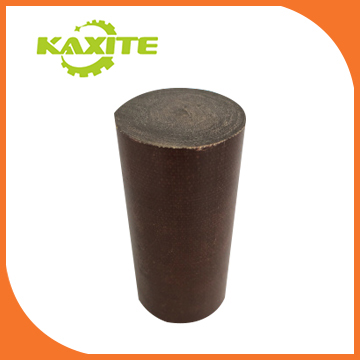
Fabric Cotton Cloth Phenolic Resin Bar are manufactured by modified phenolic resin as binder and pure cotton fabric as reinforcement. Cotton Cloth Phenolic Laminate Resin Bar have exceptionally good heat resistance and will not creep under high temperature conditions.Phenolic Resin Bar Based Cotton Cloth are easy to machine and operate with less noise than metal in numerous gear and bearing-type applications. In addition, they do not spark when struck, so fabric cotton cloth phenolic resin bar can be used in explosion-proof environments.
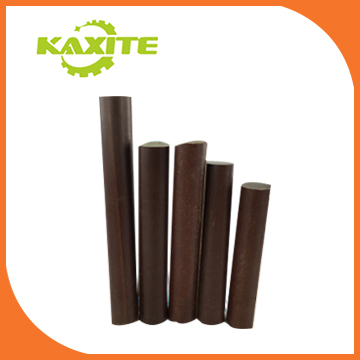
3723 Fhenolic Cotton Laminated Rod are manufactured by modified phenolic resin as binder and pure cotton fabric as reinforcement. Fhenolic Fabric Laminate Rod have exceptionally good heat resistance and will not creep under high temperature conditions.Fhenolic Cotton Laminated Rod are easy to machine and operate with less noise than metal in numerous gear and bearing-type applications. In addition, they do not spark when struck, so fabric cotton cloth phenolic resin bar can be used in explosion-proof environments.
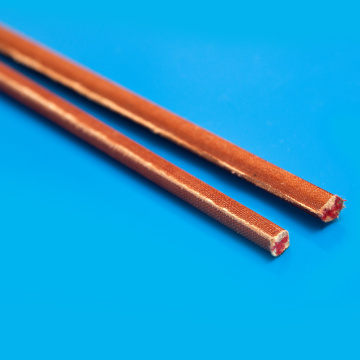
Diameter 16mm Phenolic Cotton Rod are manufactured by modified phenolic resin as binder and pure cotton fabric as reinforcement. 3025 Phenolic Cotton Laminated Rod have exceptionally good heat resistance and will not creep under high temperature conditions.Diameter 16mm Phenolic Cotton Rod are easy to machine and operate with less noise than metal in numerous gear and bearing-type applications. In addition, 3025 Phenolic Cotton Laminated Rod do not spark when struck, so 3025 Phenolic Cotton Laminated Rod can be used in explosion-proof environments.
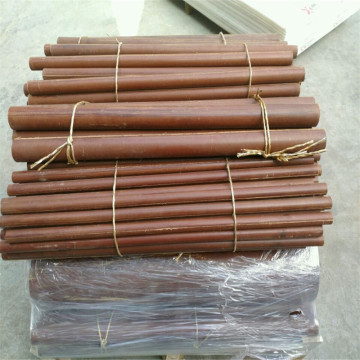
Brown 3273 Phenolic Cotton Laminated Bar are manufactured by modified phenolic resin as binder and pure cotton fabric as reinforcement. 3025 Phenolic Cotton Laminated Rod have exceptionally good heat resistance and will not creep under high temperature conditions.3273 Phenolic Cotton Laminated Bar are easy to machine and operate with less noise than metal in numerous gear and bearing-type applications. In addition, 3025 Phenolic Cotton Laminated Rod do not spark when struck, so 3025 Phenolic Cotton Laminated Rod can be used in explosion-proof environments.
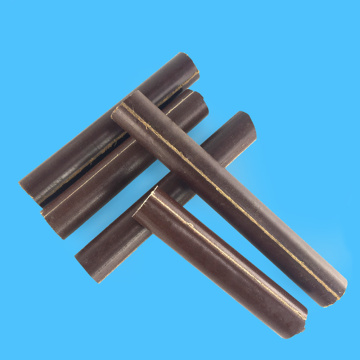
High Temperature Resistance Bakelite Rod are manufactured by modified phenolic resin as binder and pure cotton fabric as reinforcement. Phenolic Bakelite Rod have exceptionally good heat resistance and will not creep under high temperature conditions.Phenolic Cotton Cloth Rod are easy to machine and operate with less noise than metal in numerous gear and bearing-type applications. In addition, 3025 Phenolic Cotton Laminated Rod do not spark when struck, so Phenolic Cotton Cloth Rod can be used in explosion-proof environments.