Nylon, a synthetic polymer first introduced by DuPont in the 1930s, has revolutionized countless industries with its exceptional blend of strength, durability, and versatility. As a cornerstone of modern manufacturing, from high-performance automotive components to everyday consumer goods, understanding the specific grades and properties of nylon is crucial for engineers, designers, and procurement specialists. This guide delves into the technical specifications, material properties, and applications of nylon, providing a comprehensive resource for material selection. At Kaxite Sealing, we leverage deep expertise in polymer science to supply and fabricate precision nylon components that meet the most demanding industrial standards.
Nylon is a generic designation for a family of synthetic polymers known as polyamides. The most common types for industrial use are Nylon 6 and Nylon 66 (also written as Nylon 6/6). Their key characteristics include:
Kaxite Sealing provides nylon in various forms, including rods, sheets, tubes, and custom-molded parts, tailored to specific application requirements.
For engineering and design purposes, precise material data is non-negotiable. Below are key parameters for standard Nylon 6 and Nylon 66, commonly used in industrial settings. Specifications for glass-filled or other modified grades will vary.
| Property | ASTM Test Method | Nylon 6 (Typical Value) | Nylon 66 (Typical Value) |
|---|---|---|---|
| Tensile Strength | D638 | 12,500 psi (86 MPa) | 12,000 psi (83 MPa) |
| Flexural Modulus | D790 | 400,000 psi (2.8 GPa) | 410,000 psi (2.83 GPa) |
| Izod Impact (Notched) | D256 | 2.0 ft-lb/in (107 J/m) | 1.0 ft-lb/in (53 J/m) |
| Melting Point | D3418 | 420 - 430°F (215 - 221°C) | 480 - 500°F (249 - 260°C) |
| Continuous Service Temperature | --- | up to 185°F (85°C) | up to 220°F (105°C) |
| Water Absorption (24hrs) | D570 | 1.6% | 1.2% |
| Density | D792 | 1.13 g/cm³ | 1.14 g/cm³ |
Nylon's performance can vary significantly when exposed to different chemicals. This table provides a general resistance guide. Always consult with a materials engineer at Kaxite Sealing for critical applications.
| Chemical | Resistance Rating | Notes |
|---|---|---|
| Motor Oils & Greases | Excellent | Minimal swelling or degradation. |
| Dilute Acids | Fair to Good | Resistance decreases with concentration and temperature. |
| Strong Acids | Poor | Not recommended; severe degradation occurs. |
| Alkalis | Good | Generally good resistance to bases. |
| Aliphatic Hydrocarbons (e.g., Hexane) | Excellent | Very resistant. |
| Aromatic Hydrocarbons (e.g., Benzene) | Poor to Fair | Can cause swelling and loss of properties. |
| Water / Moisture | Conditional | Absorbs water, which plasticizes the material, increasing toughness but reducing stiffness and strength. Dimensional changes can occur. |
What is the main difference between Nylon 6 and Nylon 66?
The primary difference lies in their chemical structure and resulting properties. Nylon 66 has a higher melting point, better heat resistance, and slightly greater stiffness due to its more symmetrical polymer chain. Nylon 6 typically offers better impact resistance and surface finish, and it processes at a slightly lower temperature. The choice depends on the specific balance of thermal, mechanical, and cost requirements for your application.
How does moisture absorption affect nylon parts?
Nylon is hygroscopic, meaning it absorbs moisture from the air. This causes the material to swell slightly and undergo changes in mechanical properties. "As-molded" parts are typically dry and brittle. Absorbed water acts as a plasticizer, increasing toughness and impact resistance while decreasing stiffness and strength. For precision applications, it is often necessary to condition nylon parts (soak them in water or a controlled environment) to achieve stable dimensions and predictable performance before installation. Kaxite Sealing can advise on and provide pre-conditioned components.
Can nylon be used for food contact or medical applications?
Standard industrial nylon grades are not inherently certified for direct food contact or medical implantation. However, specific FDA-compliant and USP Class VI certified grades of nylon are available. These grades are manufactured with stringent purity controls and additives. If your application requires such certifications, it is essential to specify this requirement. Kaxite Sealing can source and machine compliant materials to meet regulatory standards.
What are glass-filled nylons, and when should they be used?
Glass-filled nylons are composite materials where glass fibers (typically 10% to 40% by weight) are added to the nylon resin. This reinforcement significantly increases tensile strength, stiffness (modulus), and heat deflection temperature while reducing creep and moisture absorption. The trade-off is often decreased impact resistance and increased abrasiveness during machining. They are ideal for structural components that require higher load-bearing capacity and dimensional stability under heat, such as gears, brackets, and housings.
How do I choose between nylon, acetal (POM), and UHMW-PE for a bearing or wear application?
This is a common materials selection question. Nylon offers a good balance of strength, wear resistance, and cost. Acetal (Delrin) has lower friction, excellent dimensional stability with near-zero moisture absorption, and better fatigue endurance, but can be more expensive. UHMW-PE has exceptional impact strength and the lowest coefficient of friction, but it is less stiff and has a lower maximum service temperature. For high-load, moderate-speed bearings, nylon or acetal are often preferred. For very low-speed, high-abrasion, or wet environments, UHMW-PE may be better. Kaxite Sealing's technical team can perform an application analysis to recommend the optimal material.
What machining considerations are specific to nylon?
Nylon is generally easy to machine but requires sharp tools and adequate cooling (often compressed air is sufficient) to prevent overheating, which can soften the material. It is crucial to account for its tendency to absorb moisture and its relatively high coefficient of thermal expansion. For precision parts, machining should be done after the material has been properly conditioned to its service environment to ensure dimensional stability. Using appropriate feeds, speeds, and tool geometries is key to achieving a good surface finish and accurate dimensions.
The unique property profile of nylon makes it indispensable across sectors. Kaxite Sealing supplies nylon components for a vast array of these critical applications:
Selecting the right material is only half the battle; precision fabrication is equally vital. Kaxite Sealing distinguishes itself through:
Payment Type: L/C,T/T,Paypal,Western Union Incoterm: FOB,CFR,CIF Min. Order: 10 Kilogram Delivery Time: 7 Days
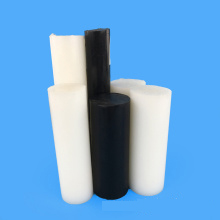
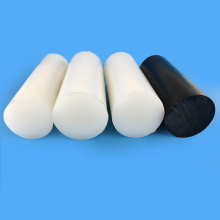
Discover Kaxite Sealing's White Black Blue Nylon Bar Standard Sizes—your go-to solution for sealing and insulation projects. Made from durable, corrosion-resistant nylon in stylish colors, these bars ensure reliable performance in industrial, automotive, or DIY settings. Ideal for professionals and hobbyists alike, they provide lasting quality and ease of use, setting Kaxite Sealing apart with precision sizing and vibrant color options. Enjoy peace of mind and efficiency in every application.
| Payment Type: | L/C,T/T,Paypal,Western Union |
|---|---|
| Incoterm: | FOB,CFR |
| Min. Order: | 100 Kilogram |
| Delivery Time: | 7 Days |
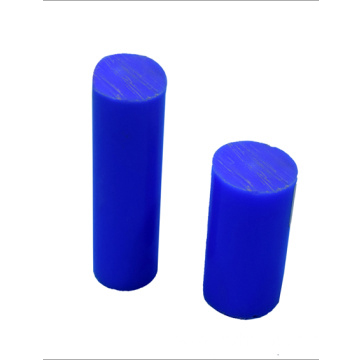
Plastics NYLON MC Rod Nylon MC Rod is the generic name for a family of long-chain polymeric amides. Generalcharacteristics of the nylons include toughness,strength,abrasion and fatigue resistance,low coefficient of friction,resiliency and heatresistance. Many of these properties can be enhanced by the addition of fillers such as molybdenum disulphide.Nylons are resistant to hydrocarbons,alkalies,keytones and esters. Engineering Plastic Nylon is a type of plastic that has excellent wear resistance and high tensile strength
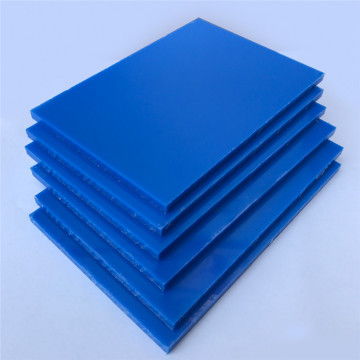
Blue Color NYLON Sheet MC 901 is the generic name for a family of long-chain polymeric amides. General characteristics of the Nylon Sheet MC 901 include toughness,strength,abrasion and fatigue resistance,low coefficient of friction,resiliency and heatresistance. Many of these properties can be enhanced by the addition of fillers such as molybdenum disulphide.Blue color MC cast are resistant to hydrocarbons,alkalies,keytones and esters.
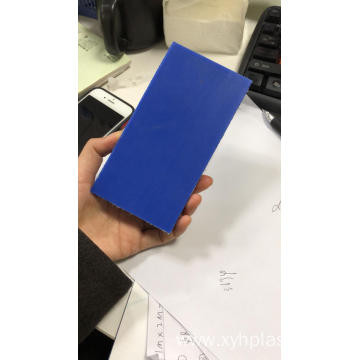
Blue MC901 NYLON Plates is the generic name for a family of long-chain polymeric amides. General characteristics of the MC Nylon Sheet include toughness,strength,abrasion and fatigue resistance,low coefficient of friction,resiliency and heatresistance. Many of these properties can be enhanced by the addition of fillers such as molybdenum disulphide.Blue color MC cast are resistant to hydrocarbons,alkalies,keytones and esters.